Wild Horse opened on March 9- a beautiful day to get back out on the course. Since then the weather has been the usual March up and down but we know to expect that from Nebraska springs.
The spring maintenance schedule is very similar to year's past. Irrigation charge-up and audit will keep us busy the next week as we will inspect each and every head and valve on the course to make sure they are working properly. If not, we make needed repairs and identify needed adjustments to arc rotation, spacing, etc. to tackle later in the year. Also we note yardage markers that are absent. We had been lax in doing this in the past couple years because we figured most everyone used rangefinders for yardage. We have learned that there are still many people (like myself) that rely on sprinkler yardages so last year we made an emphasis on updating those and will continue to look for missing yardages during this spring's irrigation audit.
Aerification then will begin in earnest in April. As we have mentioned before April is the prep month where many of our agronomic practices are done to set up the course to perform later in the year. Below is the aerification schedule for this spring:
April 2-13 Fairways-we will do one or two holes per day weather permitting.
April 16-17 Greens surrounds-back nine one day front the next
April 30-May 1--Greens-3/8" solid tine so no cores pulled and relatively small holes
May 2- Topdressing greens to fill up aeration holes.
Depending on weather, we expect greens to be nearly fully healed by May 12 and back to "normal" by May 19.
May 7- Tees
We appreciate your patience during these processes and try to work quickly to get out of your way and get the course back to normal.
Still pretty brown out there right now but we can see some green shoots starting to come on in the past couple days-won't be long now.
#12 @ Wild Horse

Tuesday, March 13, 2018

Monday, March 5, 2018
Opening
It looks like we will be able to open the course Friday March 9. Lots of snow melted this weekend and the frost started to come out of the ground allowing much of that snowmelt to finally soak in. Perhaps you wondered why we weren't open this past weekend. First we had cleared snow drifts from paths as best we could, but there still remained some ice and snowmelt that would have made some stretches of paths unpassable. Most of that has now melted and paths are firming up. Also the frost in the ground had held a lot of moisture on the top of the ground which would have easily been damaged by cart traffic. Also cups could not have been cut and old cups still had ice and snow so no pins would have been set. So despite the nice weather it wasn't feasible to open the course. We appreciate your patience and look forward to opening this weekend.
The course is looking good and should green up quicker than other year's when moisture was limited in the winter. We are looking forward to a great 2018.
On a sidenote I have been considering doing a short course tour perhaps monthly this summer to give me the opportunity to educate you about the course and what we are doing. Also it would give you the opportunity to ask questions-just don't beat me up too badly! I have not decided on day and time yet but was considering 4:30 on Monday or Thursdays just before league starts but let me know if another time might be more appropriate. I hope to take a short walking tour of a couple of holes and point out interesting features that you may or may not have noticed during your round at Wild Horse.
The course is looking good and should green up quicker than other year's when moisture was limited in the winter. We are looking forward to a great 2018.
On a sidenote I have been considering doing a short course tour perhaps monthly this summer to give me the opportunity to educate you about the course and what we are doing. Also it would give you the opportunity to ask questions-just don't beat me up too badly! I have not decided on day and time yet but was considering 4:30 on Monday or Thursdays just before league starts but let me know if another time might be more appropriate. I hope to take a short walking tour of a couple of holes and point out interesting features that you may or may not have noticed during your round at Wild Horse.
Monday, February 19, 2018
Opening Day
We are just 10 days from March 1st our supposed Opening Day. It is hard to believe with the snow flying outside my window and zero degree windchill. We will try to keep you posted on when you can tee it up at Wild Horse as best we can. As of right now with the amount of snow still around it would be likely that the first few days of golf will be walking only. That is speculation right now and weather changes quickly so check back regularly for updates.
Monday, February 12, 2018
GIS
GIS-what is that? That stands for the Golf Industry Show which was recently completed in San Antonio, TX. It is hosted by the GCSAA and NGCOA which stands for the Golf Course Superintendents Association of America and National Golf Course Owners Association respectively. There are over 550 exhibitors and 13,000 attendees to the largest trade show in the golf course management industry. With over 100 seminars available it is the most comprehensive education source for golf course management employees.
I was fortunate to attend this great event again this year and am always impressed by the magnitude and scope of this great game. I think that most attendees love browsing at the newest, greatest toys on the trade show floor and learning from experts about a myriad of topics from weed control to utilizing technology to track all inputs into a golf course. But time and time again most attendees, myself included, value the networking opportunities and conversations debating turf management.
I was especially excited to be able to take in a round of golf at Austin Golf Club with some of my closest superintendent friends that I have worked alongside at one time or another. A special treat that day was being able to visit with a special friend and Wild Horse architect Dan Proctor who is doing some bunker work on Ben Crenshaw's home course. As I walked away from the course that day I was reminded that it is the connections and friendships that I referenced above that makes my career special. I am forever indebted to Dan and Dave Axland for bringing me down to Wild Horse and giving me a chance.
My takeaway from the GIS is that technology continues to evolve and invade what was once a lower tech industry. Great advancements have been made on the equipment side of the industry in the past twenty years but now the focus is on data collection and analysis to drive decisions and conserve inputs. Sensors collecting soil moisture and nutrient levels and then relaying that data to GPS sprayers that precisely apply needed inputs is where turf management is going. These technologies are driving agriculture advancements and are beginning to make their way into golf course applications. The goal is to use technology to reduce inputs for environmental and financial benefit while still maintaining high quality playing conditions. These principles have been utilized by most good superintendents for awhile but now we are able to use technology to quantify our decision-making process.
I am grateful to be able to attend the "show" and believe it gives me great perspective to see and evaluate the big picture of our efforts at Wild Horse. I always come back motivated for the season but Mother Nature has other plans for the start of the season. Wild Horse sits under a blanket of 3-4 inches of snow right now. This has been one of the longest snow covered winters we have had in recent years and I expect the turf to respond nicely once spring arrives.
Only 17 days by the calendar until opening day. Guess we will see if we make it by then!
Wednesday, January 17, 2018
What do you do in the winter?
This is the golf course superintendents' favorite question. We do not go into hibernation or migrate like the other animals of the world, but our pace does slow down tremendously from the summer season. I would be lying to say we are busy in the winter, but there are plenty of things to do in preparation for summer. Equipment maintenance, accessory refurbishing, winter irrigation and/or snowmaking if necessary, strategic planning and ordering of fertilizer/chemical needs, and continuing education are a few of the things that I do during the winter. Oh, and recharge my batteries. I love the summer season, but it can indeed become a grind that would be unsustainable for 12 months/year.
Last week I attended the Nebraska Turf Conference in Omaha put on by UNL and the Nebraska Turf Association. It is always good to visit with my fellow superintendents and others in the industry and take in some seminars concerning our industry. Sure there are always turf management and pest control strategies, but a couple of interesting presentations were given concerning off-turf topics. First was a discussion of personality types and how they affect workplace dynamics. You may have done some of these tests to determine your "personality type" defined by colors, animals, acronyms (ISTJ, EIFP), etc. This discussion was just a slightly different way of looking at those personality types and how they interact in the workplace. I always find these interesting and feel that an awareness of what makes people tick can help all relationships. Many of us that grow grass for a living are usually not really "people -persons." I know you are shocked, but that side of the job is important to be able to develop communication strategies for employees, employers, and customers. The guys that go far in our profession are able to do both-deal with nature and with people.
For those that are familiar with the tests I am an ISTJ or the analytical type which happens to be the smallest group of our population. Therefore I must remind myself that my way of thinking is often the outlier in a group, but by being aware of that I try to adjust my communications with the rest of the group whether it be employees or customers. If you haven't ever done one of these tests-google personality test and find out what you are-it will be be very introspective and help you understand how you (and perhaps others) view the world.
WOW! a turf guy delving into psychology and sociology- I better get back to what I know and that is turf. Wait! now I also know about synthetic turfs from another presentation that examined them in comparison to natural grass fields. Obviously us "real" grass growers are hesitant to accept field turfs, but this presentation did a good job of showing the real and hidden costs of installing and maintaining synthetic turf fields. These fields are often sold as "maintenance free" but that is far from the truth. If they are indeed maintained that way they consistently fail prematurely. So I guess the take home message is if you are on a city or school board that is considering such fields do your research and really understand the maintenance and replacement costs for synthetic turf fields. Nearly every time, natural turf will be more cost efficient long term and injuries will be significantly less than synthetic turfs. Try as we might with all the technology we have, Mother Nature still does many things better than we can.
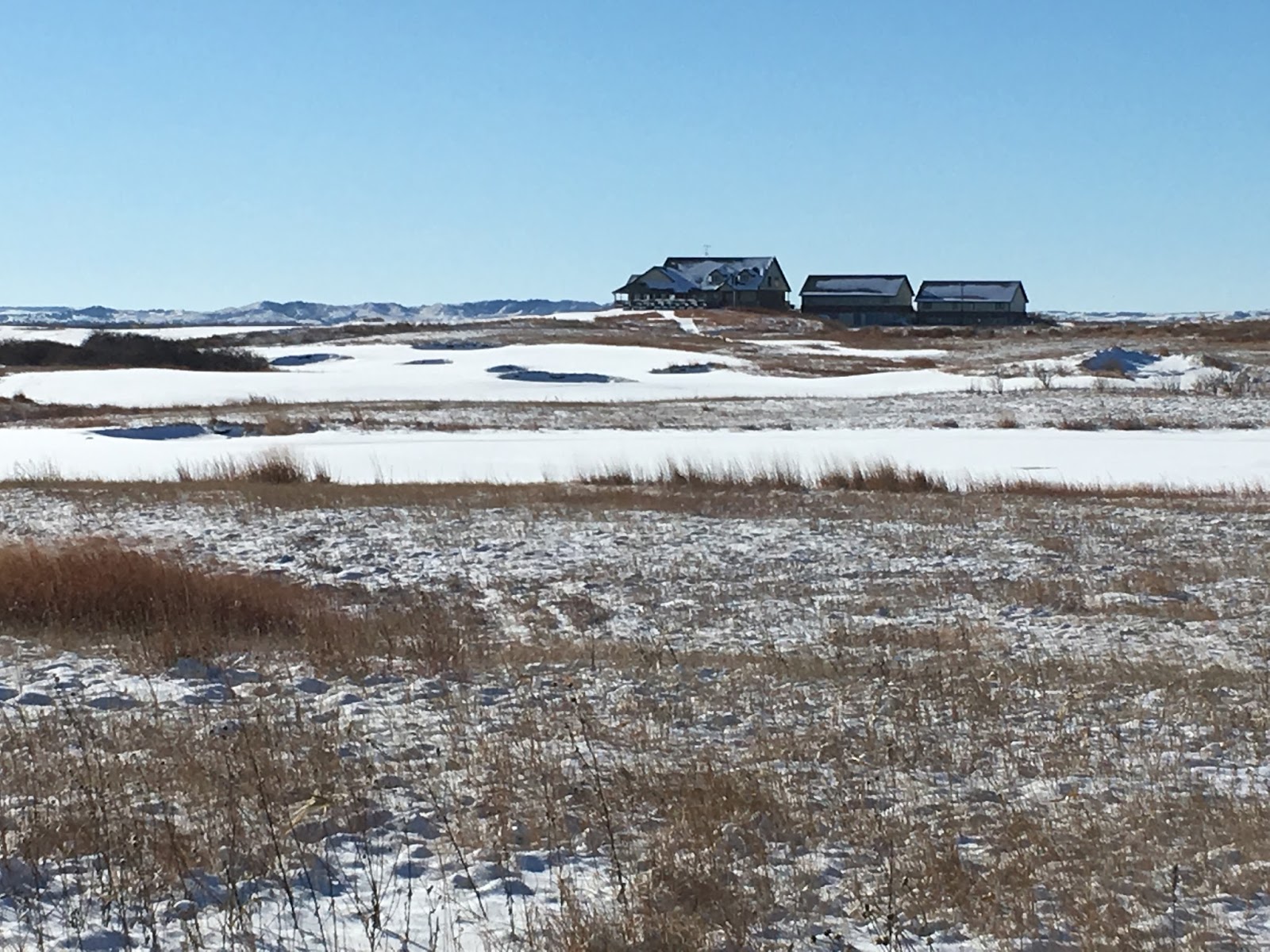
Hope you didn't read this to learn about turf or WHGC conditions or you have been disappointed to this point, but finally a quick update on the golf course. Snow cover has been consistent and persistent which is great during this frigid stretch. Took a walk around yesterday and most greens are still snow covered and looking good at this point. Still a couple months away but the lengthening days signal spring is just around the corner.

Last week I attended the Nebraska Turf Conference in Omaha put on by UNL and the Nebraska Turf Association. It is always good to visit with my fellow superintendents and others in the industry and take in some seminars concerning our industry. Sure there are always turf management and pest control strategies, but a couple of interesting presentations were given concerning off-turf topics. First was a discussion of personality types and how they affect workplace dynamics. You may have done some of these tests to determine your "personality type" defined by colors, animals, acronyms (ISTJ, EIFP), etc. This discussion was just a slightly different way of looking at those personality types and how they interact in the workplace. I always find these interesting and feel that an awareness of what makes people tick can help all relationships. Many of us that grow grass for a living are usually not really "people -persons." I know you are shocked, but that side of the job is important to be able to develop communication strategies for employees, employers, and customers. The guys that go far in our profession are able to do both-deal with nature and with people.
For those that are familiar with the tests I am an ISTJ or the analytical type which happens to be the smallest group of our population. Therefore I must remind myself that my way of thinking is often the outlier in a group, but by being aware of that I try to adjust my communications with the rest of the group whether it be employees or customers. If you haven't ever done one of these tests-google personality test and find out what you are-it will be be very introspective and help you understand how you (and perhaps others) view the world.
WOW! a turf guy delving into psychology and sociology- I better get back to what I know and that is turf. Wait! now I also know about synthetic turfs from another presentation that examined them in comparison to natural grass fields. Obviously us "real" grass growers are hesitant to accept field turfs, but this presentation did a good job of showing the real and hidden costs of installing and maintaining synthetic turf fields. These fields are often sold as "maintenance free" but that is far from the truth. If they are indeed maintained that way they consistently fail prematurely. So I guess the take home message is if you are on a city or school board that is considering such fields do your research and really understand the maintenance and replacement costs for synthetic turf fields. Nearly every time, natural turf will be more cost efficient long term and injuries will be significantly less than synthetic turfs. Try as we might with all the technology we have, Mother Nature still does many things better than we can.
Hope you didn't read this to learn about turf or WHGC conditions or you have been disappointed to this point, but finally a quick update on the golf course. Snow cover has been consistent and persistent which is great during this frigid stretch. Took a walk around yesterday and most greens are still snow covered and looking good at this point. Still a couple months away but the lengthening days signal spring is just around the corner.
Thursday, December 21, 2017
Christmas Blowout
Nope its not another Christmas Sale but it is a first in my career at Wild Horse. We charged up irrigation on December 14 and then blew out on December 18. There was another year about 10 years ago that we charged up and blew out again before spring charge-up but that was in February. Never did I think it could happen in December, but this weather pattern had left us high and dry! We were able to run through 4 irrigation cycles and get plenty of moisture back in the soil. The turf at this point of the winter looks pretty good since we have not had much in the way of very cold temperatures. Just waiting to see what the next couple months bring.
 |
| Irrigation on #18 |
 |
| Starting the blow out on the chipping green |
Friday, November 10, 2017
Winterization
Brrr! its cold out today which means winter must be just around the corner. We always fear what winter might bring to our turf and causes us some angst not being able to control much of what mother nature deals us.
We have completed a heavy topdressing on back nine greens and will finish the front on Monday 13th. The idea behind this last-minute topdressing is to bury the crown of the plant under a protective covering of sand. This insulates the crown from temperature swings and prevents desiccation. The crown of the plant is the growing point that must remain at a reasonable moisture level through the winter to do its thing come spring. To further benefit the crown of the turf we have raised the height of cut, fertilized, and aerated recently to make the plant as healthy as possible going into winter. This helps the plant produce and store carbohydrate reserves in the crown which act as a plant antifreeze and also gives the turf energy to get going in the spring.
We will be placing covers on greens knobs in the coming week to protect those extremely vulnerable areas.
Also we have not blown out irrigation lines yet as this is another way we try to prevent winterkill. This time of year is a bit nerve-wracking hoping we schedule blowout early enough to avoid prolonged freezing temperatures but late enough to provide irrigation until the last possible moment. We want to have moisture available to the plant throughout the winter so we water heavily just before blowout to ensure the soil is at full water holding capacity. We are scheduled to blow out irrigation on November 20-21 about a week later than normal.
We have also been doing some subtle reshaping work on certain bunkers which you can see below. If you glanced at the photos you probably didn't notice any difference but if you look closely at this greenside bunker on 11 you will notice in the second picture where we have pulled some sand away from that middle top lip. The sand has blown up against the lip and negated the sharp overhang lips that you see on the right side of the bunker. This is somewhat unique of our "blowout" style bunkers and many courses prefer and work hard to keep sand right up to the lips. Not here however as Proctor and Axland are the finest at creating those harder edges that look more erodible i.e. natural like pits carved by wind and water erosion. Not only does the lip look more natural now, but by pulling back the excess sand that had accumulated at the top we have reduced the chance for a plugged lie in the face of the bunker.


Finally here is a picture of 8 fairway bunker after the work was completed. Unfortunately I didn't take a before picture, but you can see by the shadows the lip we created on this bunker. These are subtle things you probably didn't notice until now but we are always trying to keep the course looking as intended from the architect's point of view. Dan Proctor visited with me a couple summers ago about redefining some of these edges and I did some last fall, but finally found a process that I think works better at accomplishing what we want which is a natural looking sand trap.

We have completed a heavy topdressing on back nine greens and will finish the front on Monday 13th. The idea behind this last-minute topdressing is to bury the crown of the plant under a protective covering of sand. This insulates the crown from temperature swings and prevents desiccation. The crown of the plant is the growing point that must remain at a reasonable moisture level through the winter to do its thing come spring. To further benefit the crown of the turf we have raised the height of cut, fertilized, and aerated recently to make the plant as healthy as possible going into winter. This helps the plant produce and store carbohydrate reserves in the crown which act as a plant antifreeze and also gives the turf energy to get going in the spring.
We will be placing covers on greens knobs in the coming week to protect those extremely vulnerable areas.
Also we have not blown out irrigation lines yet as this is another way we try to prevent winterkill. This time of year is a bit nerve-wracking hoping we schedule blowout early enough to avoid prolonged freezing temperatures but late enough to provide irrigation until the last possible moment. We want to have moisture available to the plant throughout the winter so we water heavily just before blowout to ensure the soil is at full water holding capacity. We are scheduled to blow out irrigation on November 20-21 about a week later than normal.
We have also been doing some subtle reshaping work on certain bunkers which you can see below. If you glanced at the photos you probably didn't notice any difference but if you look closely at this greenside bunker on 11 you will notice in the second picture where we have pulled some sand away from that middle top lip. The sand has blown up against the lip and negated the sharp overhang lips that you see on the right side of the bunker. This is somewhat unique of our "blowout" style bunkers and many courses prefer and work hard to keep sand right up to the lips. Not here however as Proctor and Axland are the finest at creating those harder edges that look more erodible i.e. natural like pits carved by wind and water erosion. Not only does the lip look more natural now, but by pulling back the excess sand that had accumulated at the top we have reduced the chance for a plugged lie in the face of the bunker.


The next two pictures highlight the same before and after on the large bunker right of 18 fairway. The shadows help define the harder dropoff edge that was created. Also lots of sand was pulled back down into the belly of the bunker.


Finally here is a picture of 8 fairway bunker after the work was completed. Unfortunately I didn't take a before picture, but you can see by the shadows the lip we created on this bunker. These are subtle things you probably didn't notice until now but we are always trying to keep the course looking as intended from the architect's point of view. Dan Proctor visited with me a couple summers ago about redefining some of these edges and I did some last fall, but finally found a process that I think works better at accomplishing what we want which is a natural looking sand trap.

Subscribe to:
Posts (Atom)